
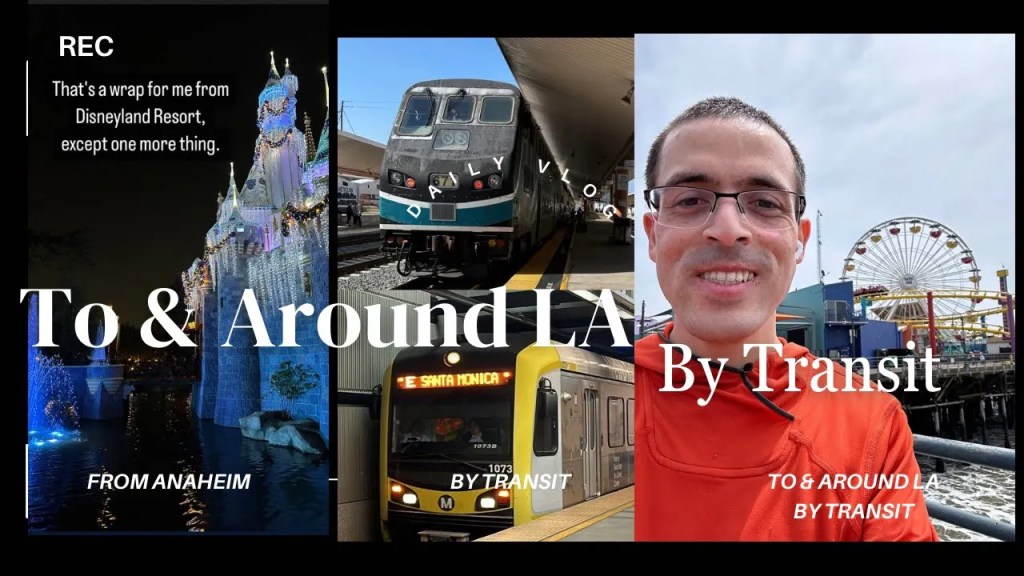
Want to go to Los Angeles for the day from the Anaheim Resort Area, not break the bank, not needing a tour guide, and get back to Anaheim for dinnertime? If you have a free day from your business conference or Disneyland days, you can go from Anaheim, to & around Los Angeles by transit! However, this has to be done with proper planning ahead of time, limiting your itinerary, and using transit phone apps such as Transit App & Moovit to track when the next train or bus will be arriving. First let’s take the bus from the Anaheim Convention Center hotels to the ARTIC.
Table of Travel Itinerary:
- OC Bus & ART from Anaheim Convention Center to ARTIC
- ARTIC To Los Angeles Union Station via Metrolink
- Los Angeles Union Station & LA Metro
- A & E Line light rail to University of Southern California
- Culver CityBus line 1 to Venice Beach
- Jogging from Venice Beach to Santa Monica Pier
- Santa Monica Pier & Pacific Park
- LA Metro Rapid 720 to LACMA
- Los Angeles County Museum of Art (LACMA)
- From LACMA to Pershing Square via Metro Local 20 & Metro D Line
- Angels Flight Railway
- LA Metro A Line From Grand Avenue Arts/Bunker Hill to Union Station
- Metro A Line & Metrolink OC Back to Anaheim
- Conclusion
OC Bus & ART from Anaheim Convention Center to ARTIC
Staying at the hotels at the Anaheim Convention Center, such as the Anaheim Marriott, guests can walk half mile take the OC Bus 50 East from Katella/Harbor stop to the Anaheim Regional Transportation Intermodal Center (ARTIC), for $2.50 cash or $2 with the OC Bus app. They can also do point-to-point requests on Anaheim Regional Transportation (ART) via the A Way We Go app, $6 for a day pass per adult. However, passes for both agencies are included with our next leg, Metrolink & Amtrak Pacific Surfliner to Los Angeles.
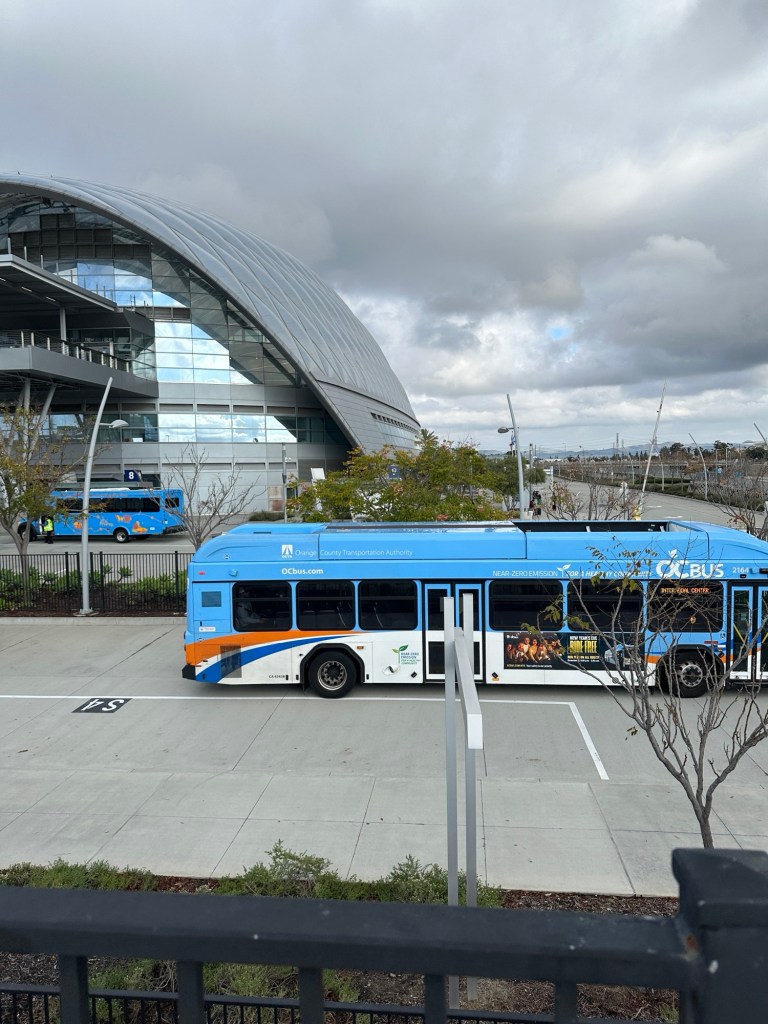
ARTIC To Los Angeles Union Station via Metrolink
To get to Los Angeles by train, you can take Amtrak Pacific Surfliner or Metrolink’s Orange County line. Metrolink is a commuter service funded by the country transportation authorities of the counties it operates in, with commuter service hours with several LA bound trains in the morning and several outbound trains in the evening. Fare is $8.75 per way in about 50 minutes with a few stops along the way, it features bike racks & restrooms. Transit transfers are free with most transit agencies such as ART, OC Bus, LA Metro in Los Angeles, and many more for a clean last mile to your destination. Just make sure to scan the pass when you board the bus, if it does not scan, just show it to the bus operator or transit personnel when asked to show the pass.

During the summer, weekend, and holidays, Metrolink offers all day passes for those time periods. Weekend & holidays have drastic cuts in service vs. weekdays, which have weekend all day $10 pass with kids riding for free. From 18 trains on weekdays to 8 trains on the weekend for the Orange County line, which necessitates taking Amtrak Pacific Surfliner on the weekends since they have 20 trains everyday. To encourage summer adventures by transit, Metrolink offers $15 all day passes during the summer from Memorial Day to Labor Day, which I took advantage of this trip.

Amtrak Pacific Surfliner is a nicer train service than Metrolink with more than ten trains per way per day from Los Angeles to San Diego, with some trains that go up the coast to Ventura, Santa Barbara, and San Luis Obispo. Amtrak fare is $16 per way in about 40 minutes since it only stops at Fullerton before Los Angeles. It features large seats with fold out tables, power outlets, restrooms, luggage storage, and a cafe car. Transit transfers are limited but include OC Bus, ART, and the only LA County transit agency is the Glendale Beeline, surprisingly, not LA Metro & won’t validate.
Los Angeles Union Station & LA Metro
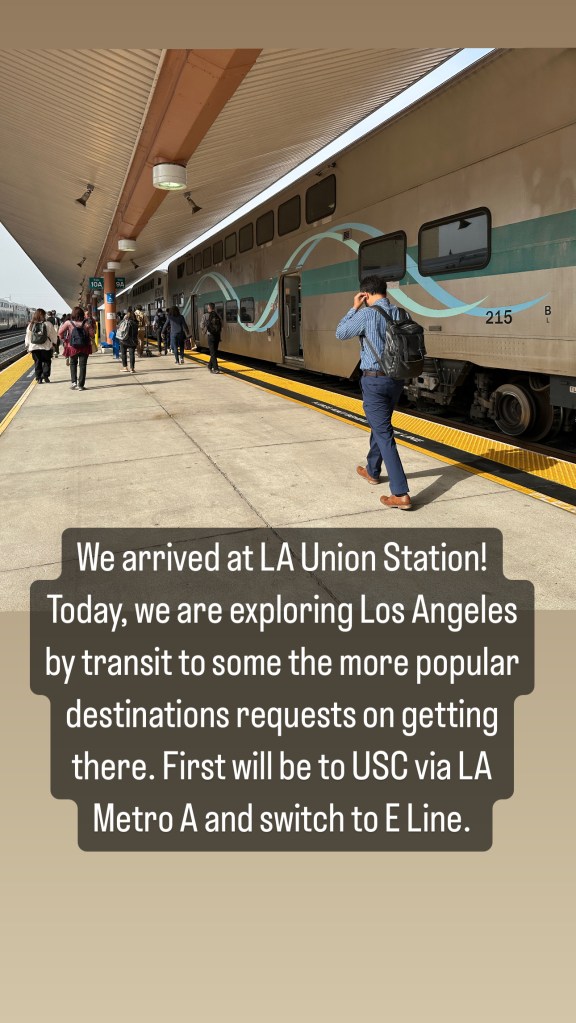
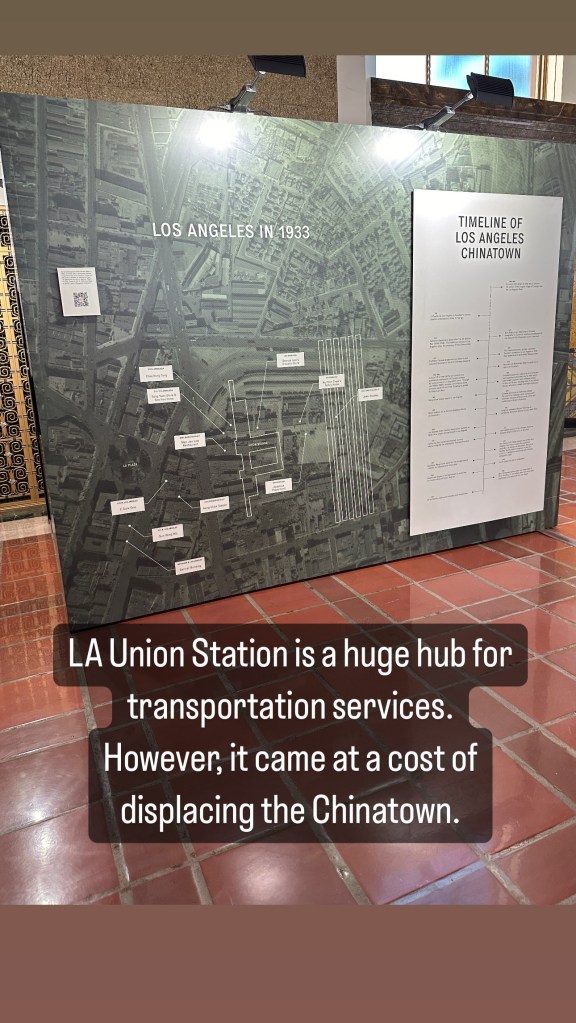
After a nice train ride to Los Angeles, we arrived at our first stop, Los Angeles Union Station. Opened in 1922, it is a huge train & bus hub for Los Angeles as it serves five Metrolink lines to the greater Southern California region, Amtrak Pacific Surfliner, three Amtrak long distance lines, Amtrak motorcoach, LA Metro A, B, & D; LA Metro buses, and many more bus services. The land was originally a Chinatown, however, was relocated several blocks over for construction of the train station, and there was an exhibit in the waiting hall about the former Chinatown before the relocation.

Most transit services in Los Angeles County are by Los Angeles County Metropolitan Transportation Authority (LACMTA), branded as Metro, or more commonly known as & will be used in the article is LA Metro. Fare costs for all LA Metro bus & rail services are $1.75 per ride, validated with Metrolink QR code for transfers, and tap on with the Transit Access Pass (TAP) card contactless fare card for $2 for a new card, or with a virtual wallet with the TAP app, which can grant you two hour transfers to any LA Metro Bus & Rail. Let’s go to platform one to take the A line to downtown Los Angeles, and then transfer to the E Line to USC, Culver City, & Santa Monica.
A & E Line light rail to University of Southern California
From platform one, the A line light rail arrives from Azusa & Pasadena to go south to Long Beach. From LA Union Station, the train goes over U.S. Highway 101 and then underground with the new regional connector that opened in 2023, giving light rail service through downtown service instead of starting in downtown, and not needing to transfer to the heavy rail B & D subway lines from Los Angeles Union Station to downtown & transfer to the light rail lines.
Downtown Los Angeles has several stops to various downtown destinations that we will visit on other occasions including Angels Flight, Grand Central Market, the Block, the Broad Museum of Art, and Crypto Arena & Los Angeles Convention Center at Pico station. After Pico, the A line splits off to go to Long Beach, so I got off the A line at Little Tokyo and waited for the following E Line coming in from eastern Los Angeles to go to Santa Monica via USC & Culver City. After Pico station, the A & E lines split to go to Long Beach & Santa Monica, respectively.
After a couple stops on the Expo Park/USC stop. It is within walking distance to E line is the University of Southern California (USC), a private four-year university since 1880, and the museums & sports venues of Exposition Park. Exposition Park features the Natural History Museum of Los Angeles County, California Science Center, Lucas Museum of Narrative Art, California African American Museum, LA Memorial Coliseum, and BMO Stadium. LA Memorial Coliseum is home of the USC Trojans football program, and BMO Stadium is home to the Los Angeles Football Club of Major League Soccer & Angel City Football Club of National Women’s Soccer League. If you are going to a museum, make sure to double check if there are events happening at USC or Exposition Park.
Past USC, the E Line continues along the median of Exposition Boulevard, stopping at older neighborhoods through Baldwin Hills. Then a stop at Crenshaw for the LA Metro K line towards LAX with a people mover coming soon. Then our next stop at Culver City.
Culver CityBus line 1 to Venice Beach
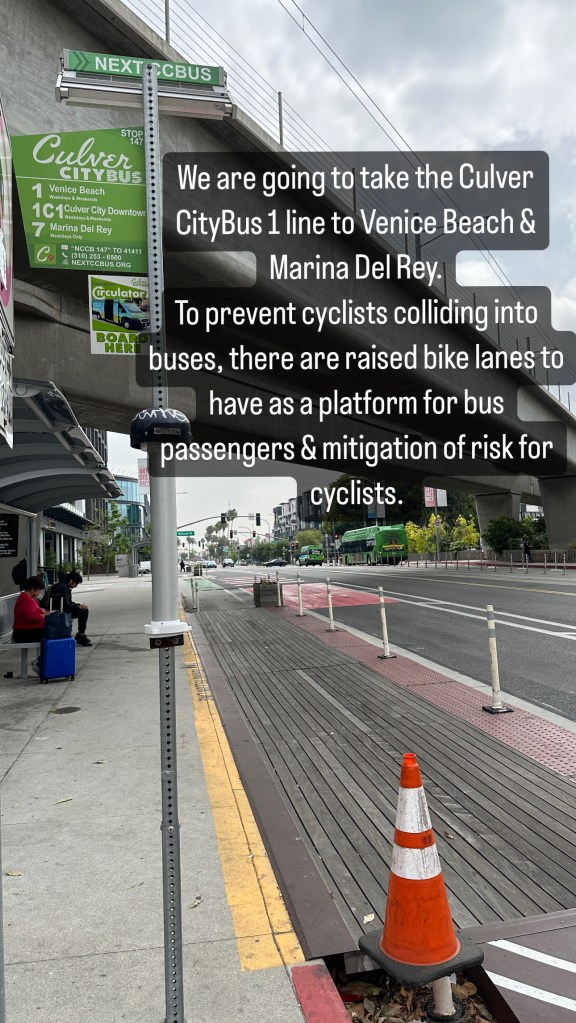
From Culver City, we are going to take the Culver City Bus line one to Marina Del Rey, a 5.5 mile bus ride for a fare of a dollar with cash or Tap card. Cities that are not incorporated into Los Angeles such as Culver CityBus & Santa Monica’s Big Blue Bus, have their own bus system, which both started in 1926. The bus stop at Washington Blvd & National Blvd has a safe way that bicyclists won’t get slammed into a bus, with raised platforms for bus passengers to board the bus, and bicyclists get bikes safely go through the platform as bus passengers wait at the shelter on the sidewalk.
The Culver CityBus line 1, 5.5 miles down Washington Boulevard through Culver City and into Marina Del Rey, with our stop at Washington/Ocean Ave. Along the way we passed by Sony Pictures Studios which has posters for future film releases. The plan was to walk a couple blocks down Via Marina to Cheesecake Factory for our fitness segment of the day. However, due to the detour, that was not the case, as we turned right on Abbot Kinney Boulevard and ended up away from Marina Del Rey to Venice Beach. Since it will take up too much time to back track to Marina Del Rey & the Venice Canals, we will save those for another day trip.
Jogging from Venice Beach to Santa Monica Pier

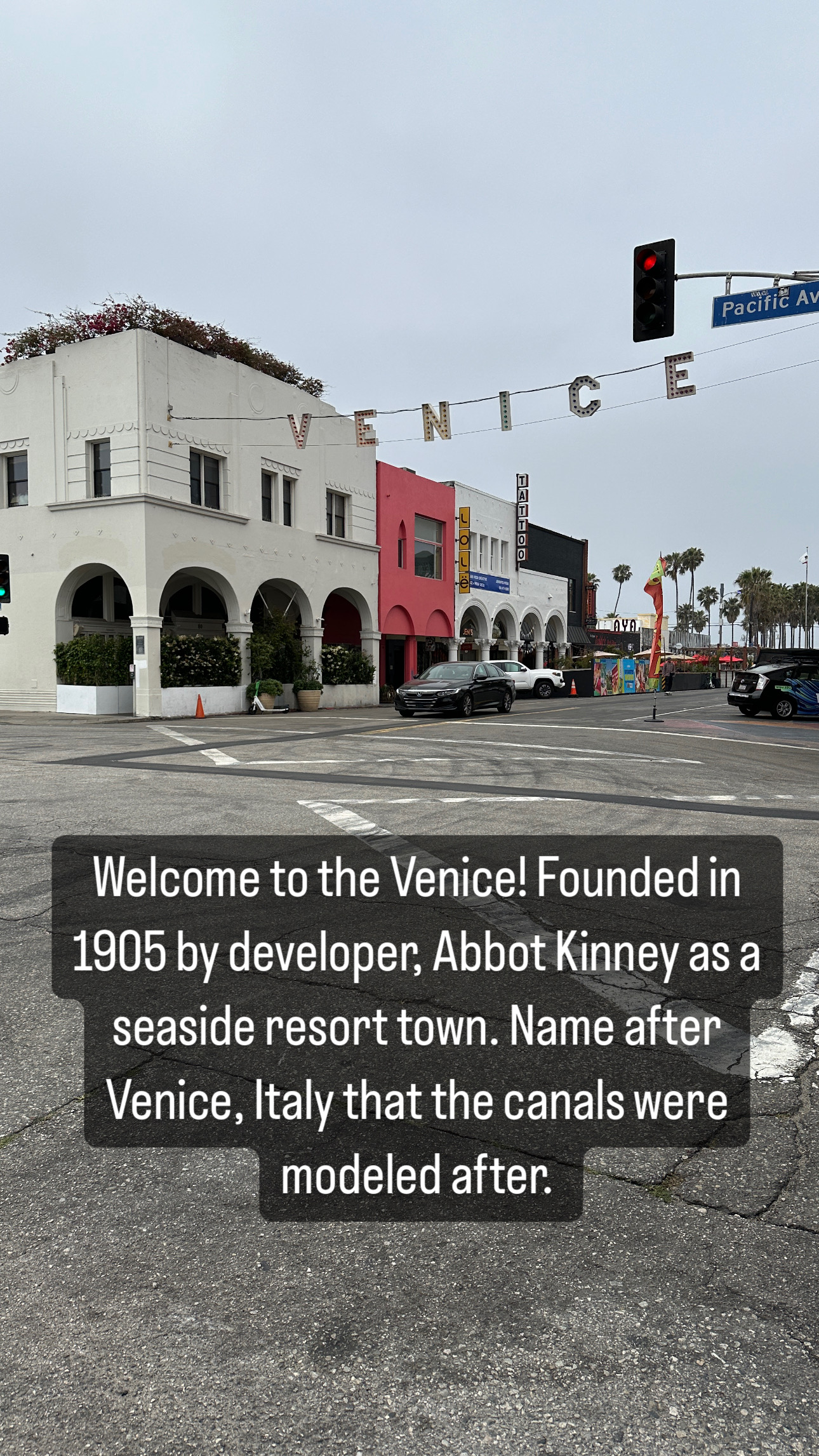
The Culver CityBus line 1 ends at Windward Ave/Main St, right by the Venice sign, the perfect spot to start our jog from Venice Beach to the Santa Monica Pier. Venice was founded by developer Abbot Kinney, who was named for the street that we turned on, in 1905. He named the town after Venice, Italy, in which he modeled canals along the Venice Canals. Venice is part of the city of Los Angeles, annexed in 1926, and is separate from the cities of Santa Monica & Culver City. In 2024, it still has the seaside town feel, but in a different way. It has the promenade that is lined with touristy shops, restaurants, sidewalk vendors, and even bike & skateboard rentals for visitors to take advantage of the bike path. Along with a separated bikeway and even a skatepark. Venice is also known for extreme sports like skateboarding & BMX biking with the skatepark, and even Red Bull was hosting a skateboarding competition that weekend.

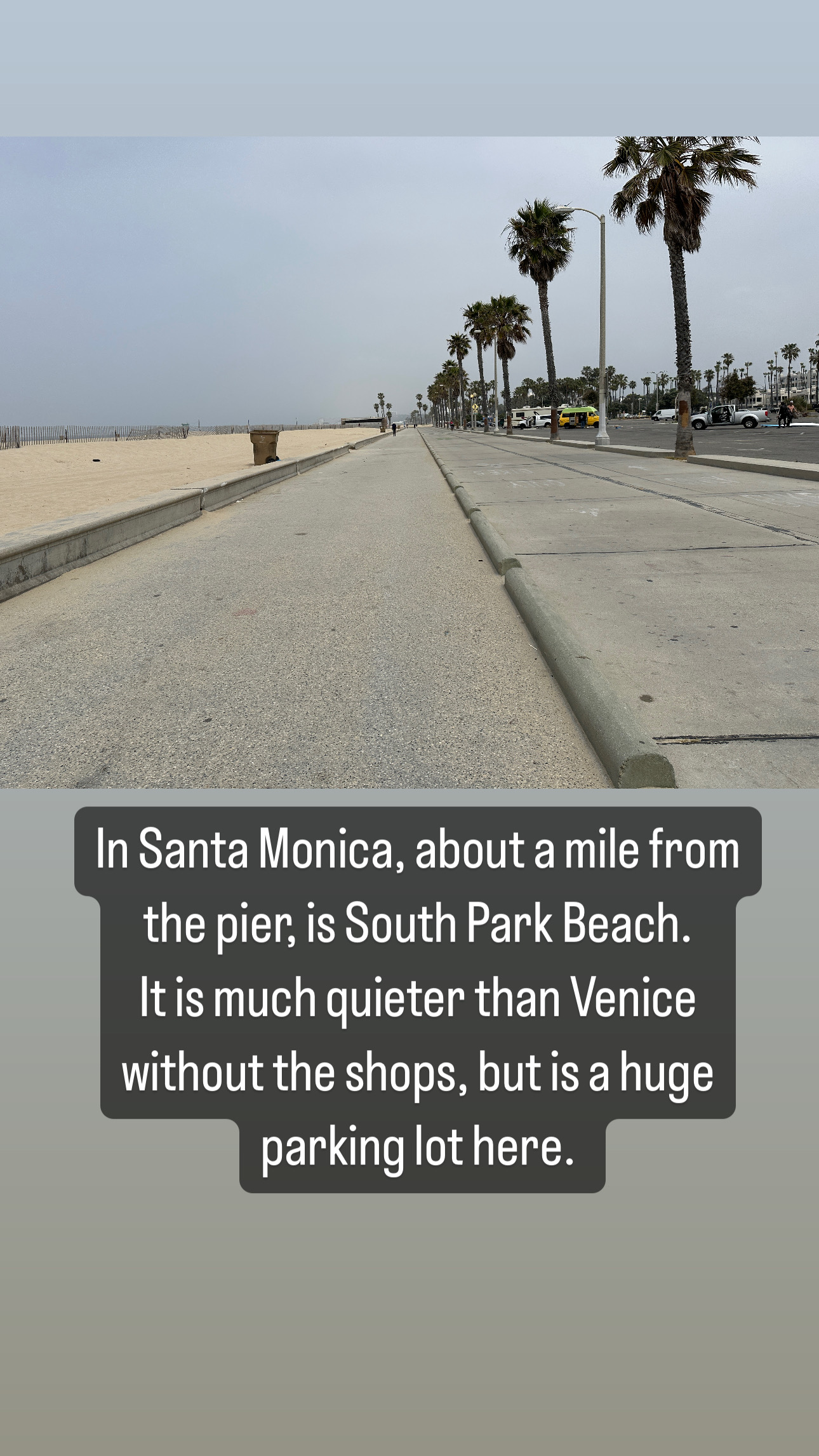
Jogging from Venice Beach to Santa Monica Pier is 2.5 miles along the pedestrian promenade. The first mile is in Venice where you are bombarded with loud music from stores and vendors vying for your attention to their products. The rest of the 1.5 miles is in the city of Santa Monica where buildings are pushed all the way back to Barnard Way, and the pedestrian & bike path is in between the beach and either grass areas or parking lots. I also took a moment to take in the beach as well. Farther along the pathway, the Santa Monica Pier was in sight when I was passing by Muscle Beach, where people work out on gym equipment at the beach. After a 2.5 mile walk/jog along the promenade, about 45 minutes, I reach the Santa Monica Pier.
Santa Monica Pier & Pacific Park
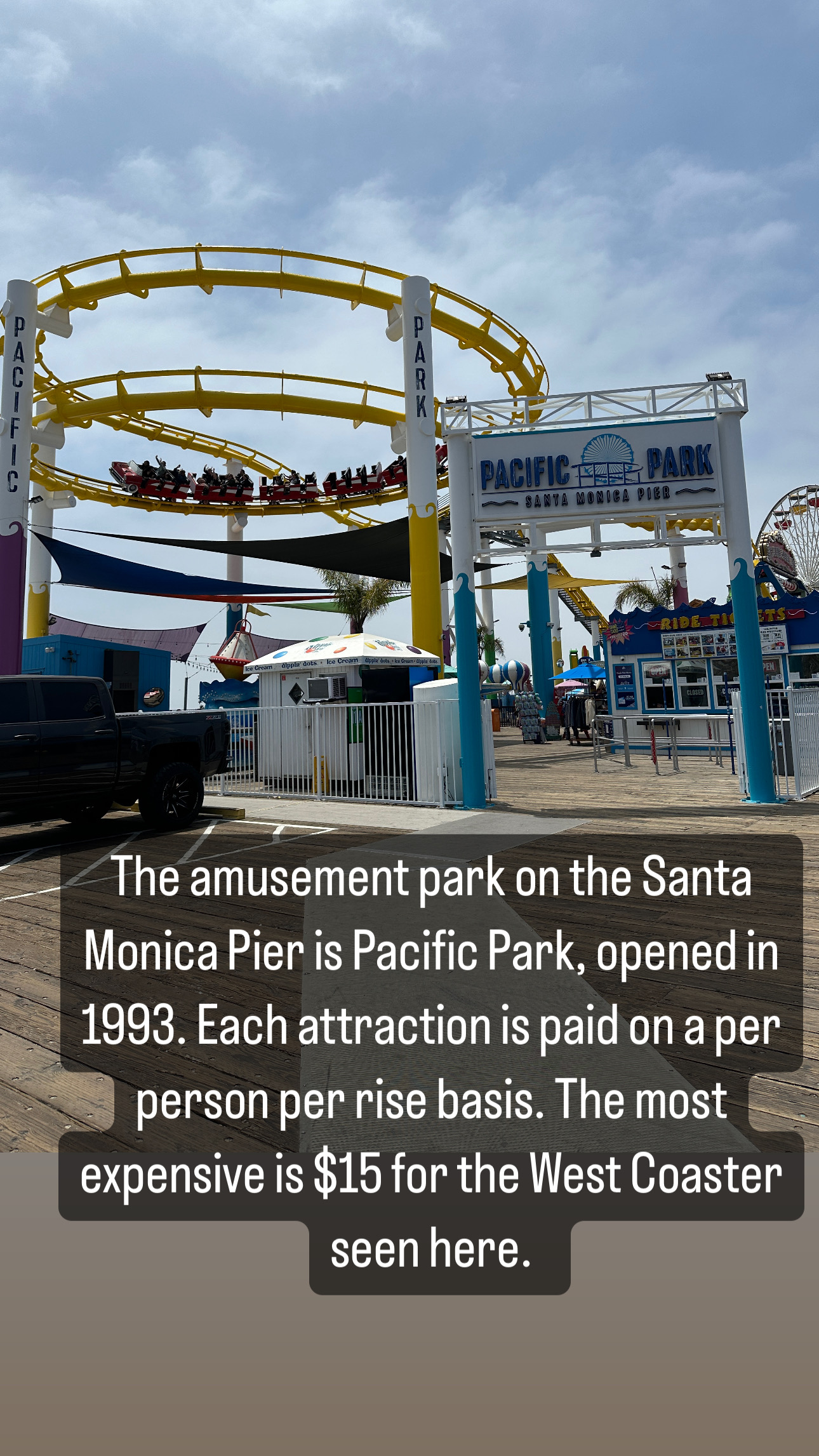
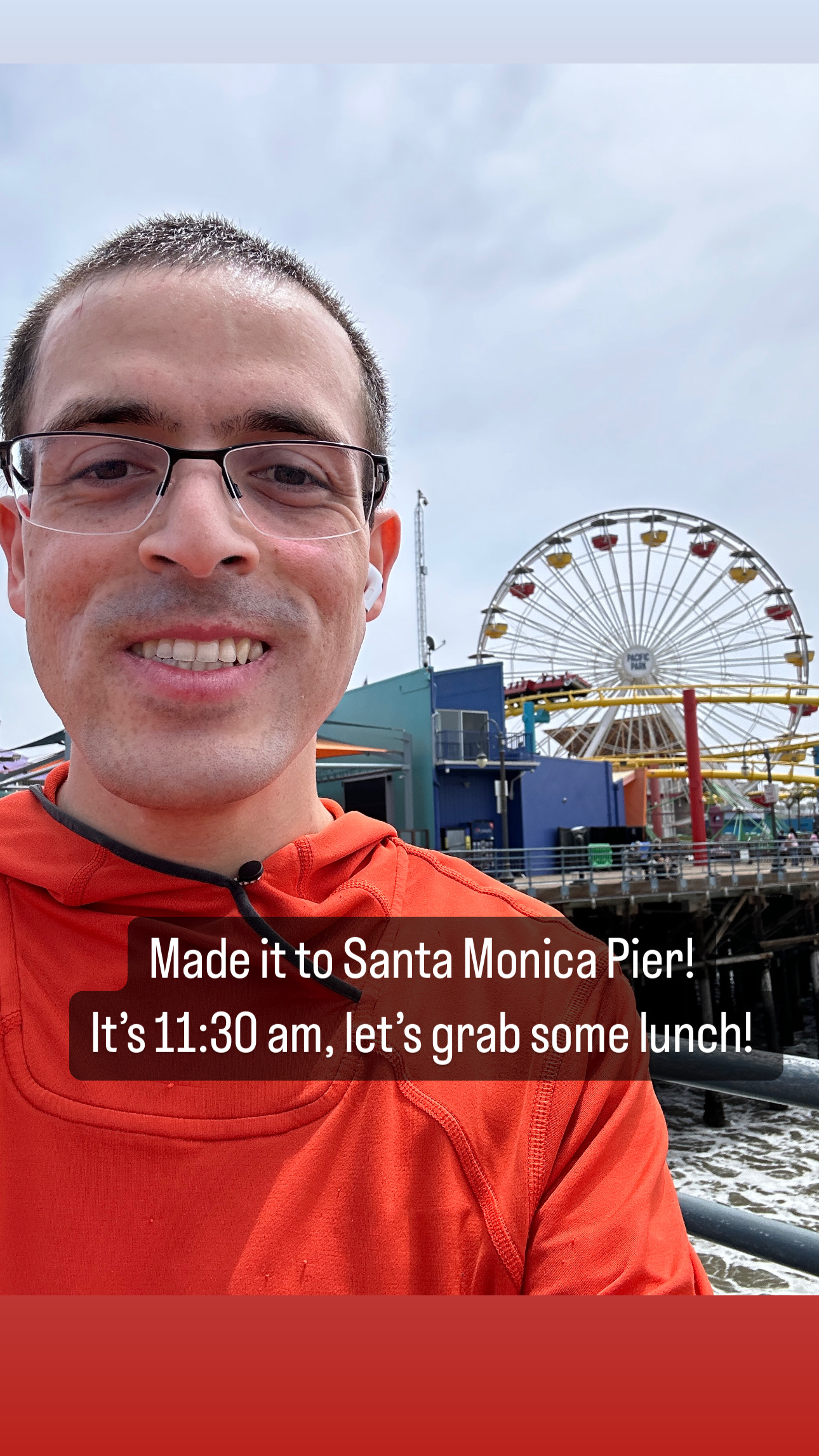
The Santa Monica Pier opened in 1909, which now features many shops, restaurants, Heal the Bay Aquarium, a historic carousel, and Pacific Park. Pacific Park opened in 1991 as an open to visit amusement park with rides on a pay per person basis, their main attractions for the Ferris Wheel & the West Coaster rollercoaster, both are $15 each. After taking pictures, it was time for lunch.

I ate lunch at the Albright, a counter service seafood restaurant opened in 1977 featuring a wide range of seafood. From fish & chips, to salmon, lobster roll, Dungeness crab, oysters, fish tacos, and even hamburgers for the non-seafood people. I had their three fish tacos and it was good! They also have free WiFi as well when you sign up for their newsletters. That was good, now time for our next destination, the Los Angeles County Museum of Art, which we will get there by bus.
LA Metro Rapid 720 to LACMA
From Santa Monica Pier, I walked up .4 miles up Colorado Street to 5th Avenue, which is the terminus for the LA Metro E line. However, we need to get a bus to the Los Angeles County Museum of Art. Colorado/5th Street is the start of the LA Metro Rapid 720 and Local 20 to downtown Los Angeles via Wilshire Boulevard. Tapping on my TAP for $1.75 fare, the Rapid 720 runs along the Local 20 route with fewer stops so we can get to the museum faster, however, it’s hard to track where the stops are since I have not been on this route. Thankfully, I have the Transit app to navigate through the confusing bus system.
The bus route goes a couple blocks up 5th street, and then turns right on to Wilshire, and will entirely go through the Wilshire to downtown Los Angeles. We continue along through Santa Monica’s seven stops until we get to Interstate 405 at the Veterans Affairs Medical Center & National Veterans Park.
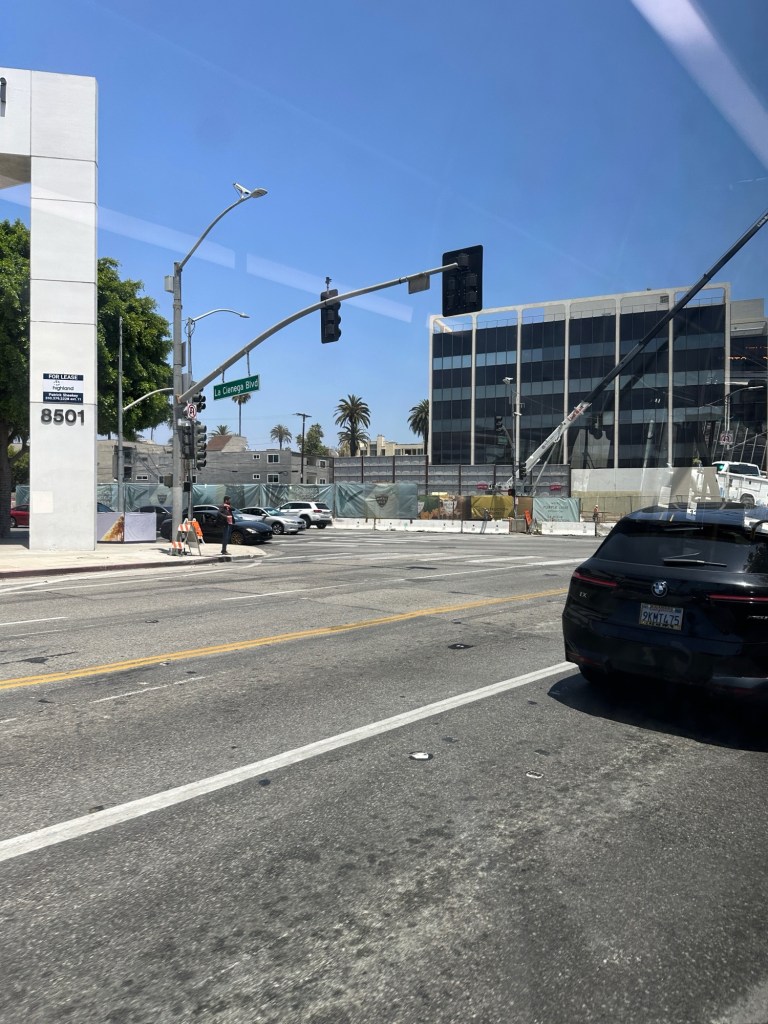
At this point, all the bus seats were taken and was really crowded, which why LA Metro is finally working on the much needed D line subway extension from Wilshire/Western in Koreatown to the VA Medical Center in Westwood, with the first segment to open in 2025 to La Brea, Fairfax, and La Cienega in Beverly Hills. Then to Rodeo Drive & Century City in 2026, and to Westwood for UCLA & VA Medical Center in 2027. Rapid 720 and Local 20 will still be in service since there will be plenty of passengers who will use the lines for more local service and into Santa Monica as I am taking right now. After an hour bus ride through Santa Monica, Westwood, Beverly Hills, and into the Miracle Mile for my stop for the Museum Row at the Miracle Mile, however, I missed the stop and was dropped off a mile away at the following stop. Oh well, let’s get to the museums.
Los Angeles County Museum of Art (LACMA)


The Los Angeles County Museum of Art (LACMA) is an art museum by the County of Los Angeles that was originally part of the Los Angeles Museum of History, Science and Art in 1910 at what is now the Natural History Museum at Exposition Park. Then later moved to their own facility in the Miracle Mile in 1961. They currently have over 152,000 pieces of art in their collection that are rotated out regularly to their BCAM & Resnick Pavilion exhibit buildings. Currently under construction is their newest addition, David Geffen Galleries, which will open later in 2024. Admission rates are adult non-student rate of 18 to 64 years is $28, seniors of 65 years or greater & adult students are $24, teens & youth between 3 to 17 years are $13, and newborn to 2 years are free. If I take my time looking at each plaque for the most interesting pieces, I would take about two hours, however, since I had a tight schedule, I only had an hour. It was cool to check out myself, but way too expensive for a family of four.
If you are looking for admission to admission free art museums, the Broad and the Museum of Contemporary Art, both located at the Grand Avenue Arts/Bunker Hill LA Metro station, you can visit for free! Online reservations are required. We will go to both of them on another trip.
From LACMA to Pershing Square via Metro Local 20 & Metro D Line
I finished my visit to the LACMA at 3 pm, which means it is time for me to head back to downtown Los Angeles to Union Station for the Metrolink to Anaheim, not without some more transit research. The LA Metro Local 20 bus arrived at Wilshire / Curson and two other passengers & I boarded the bus. I tapped on my TAP card for a $1.75 fare, which was actually $1.50 as I reached the daily fare cap of $5 for LA Metro bus & rail for the day. The bus was getting really full with roughly twenty five passengers. I wanted to see what it’s like currently for the D line for Wilshire/Western, so I deboard at the bus stop there along with seven other passengers. Wilshire/Western in Koreatown is the current terminus of the D line, which has stops for three bus systems: LA Metro Rapid 720 & Local 20 along Wilshire, Local 207 along Western, along with a few other LA Metro bus lines, Santa Monica’s Big Blue Bus Route 7 with local, express (not in service), and rapid variants; and Los Angeles Department of Transportation’s DASH Wilshire Center/Koreatown loop.

We all took the escladers down to the subway level and tapped on my TAP card through the turnstiles. However, we all had to wait a moment as LA Metro cleaning crews were cleaning a spill of some sort, at least they were taking time cleaning up the spill. When the crews were finished, we all boarded the subway to downtown Los Angeles. The subway car was clean & okay to ride. After three stops, I deboarded at Pershing Square to my next train transport, Angels Flight.
Angels Flight Railway
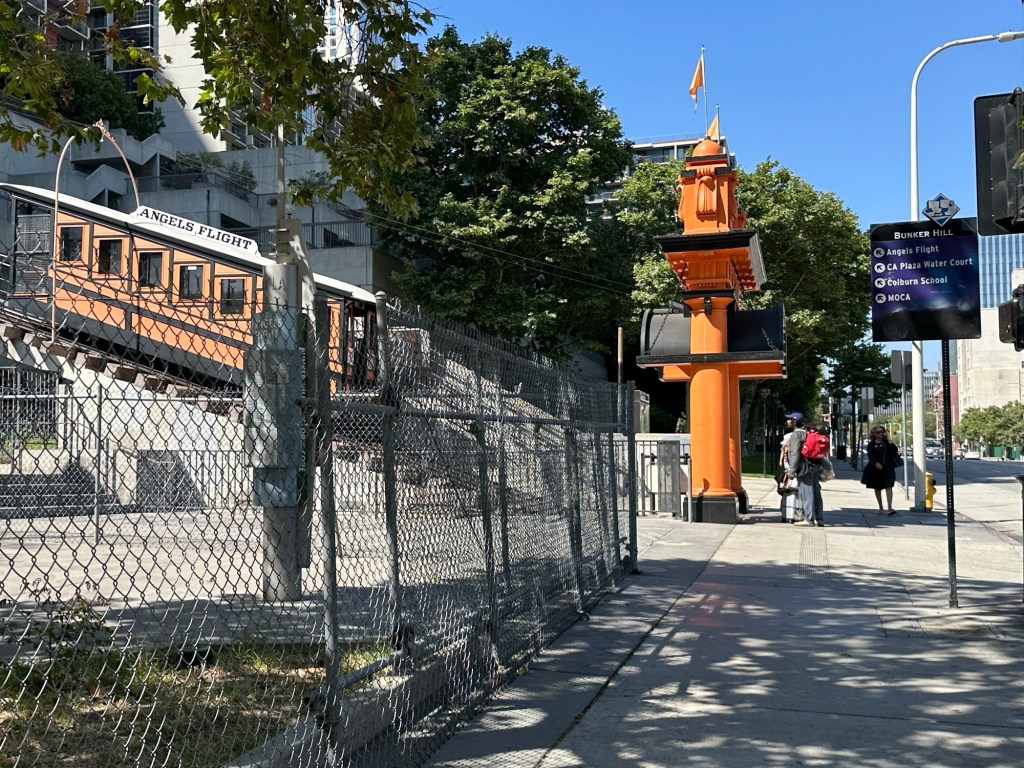
Angels Flight Railway is a funicular railway in downtown Los Angeles, where passengers can take a minute ride up Bunker Hill on a piece of history. Funiculars are a type of train system in which the car is pulled up & down by a motorized corded rope system. Angels Flight dates back to 1901 by Colonel James Ward Eddy that’s built between Hill & Olive Street, above the 3rd street tunnel. Angels Flight had seven different owners during the years. The fifth owner, Lester Moreland had to sell Angels Flight in 1962 where the location would be redeveloped by the city for “urban renewal” and then was forcibly dismantled in 1969 where the cars were put into storage. In 1991, the Los Angeles Conservancy & help of other agencies helped to rebuild Angels Flight, and was reopened in 1996 with ownership & operator by the Angels Flight Railway Foundation. In 2013, it was closed due to an accident, and then reopened in 2017.
Fare is $1 cash per way or 50 cents with a TAP card. A ride each way is just less than a minute ride. Payment is done at the top of the hill at One California Plaza, which I paid with my TAP card.
LA Metro A Line From Grand Avenue Arts/Bunker Hill to Union Station

Angels Flight was three blocks from Grand Avenue Arts/Bunker Hill LA Metro station for the A & E lines, located across the street from the Broad Art Museum, The Museum of Contemporary Art Los Angeles, and Walt Disney Concert Hall, which we will visit some other time. According to Progressive Railroading, since the station is built on Bunker Hill, LA Metro had to dig a hundred feet below the surface for it to be leveled with adjacent LA Metro stations. The way of getting to the platform is by elevator due to the depth, no escalators. You can still use stairwells in an emergency. The elevators go from the footbridge across the street from the Broad to the concourse level, and then stairs & escalators to the platform. I missed the A line train by a couple minutes, so I had to wait about ten minutes for the next one. The next A line train arrived & the train operator left the heater on and everyone in the car was sweating, including me.
Metro A Line & Metrolink OC Back to Anaheim
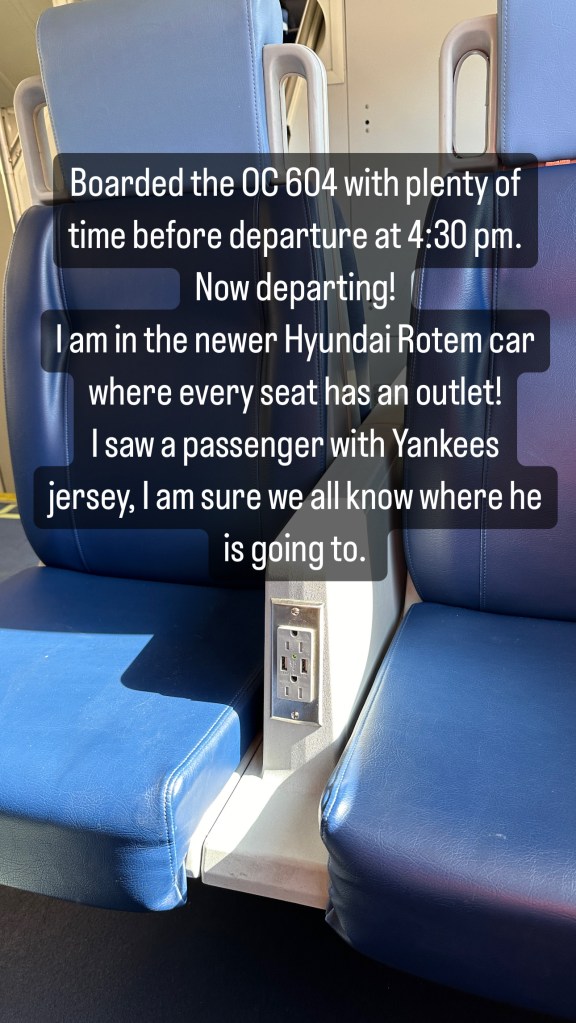
After a hot LA Metro A line train ride back to Union Station, the majority of passengers disembarked the train for their next connection, including me for the Metrolink Orange County 604 at 4:30 pm to get back to Anaheim. That evening, the Los Angeles Angels would play against the New York Yankees at home in Angel Stadium, so I espaily saw several Yankees fans on the train & picked up a few along the way back to Anaheim. Along the way, going over Interstate 5 in Commerce, was the congested freeway & then me relaxing on a smooth Metrolink ride back to Anaheim. Back in Anaheim, I jogged back to the apartment, Angels & Yankees fans just walked through the parking lot to Angel Stadium, and Anaheim Resort guests just needed to take the ART Bus or OC Bus 50 line back to the resort area.
Conclusion
It was a long & tiring day exploring some of the many attractions that make Los Angeles a great tourist destination. If I drove to all of the destinations, I use up so much gas, frantically trying to figure out where to drive, dealing with traffic, finding & paying for parking, and driving myself was not a viable option anyways Hopefully, my coworkers can use the information to help our hotel guests to navigate from Anaheim to Los Angeles by transit, and maybe even YouTube viewers & blog readers like you. Thank you for reading and/or watching!


 AntSol Travel
Leave a comment